

Objectives:
-
- Understand what Automatic Negative Thoughts (ANTs) are.
-
- Learn how to identify negative thought patterns and compare them with Scripture.
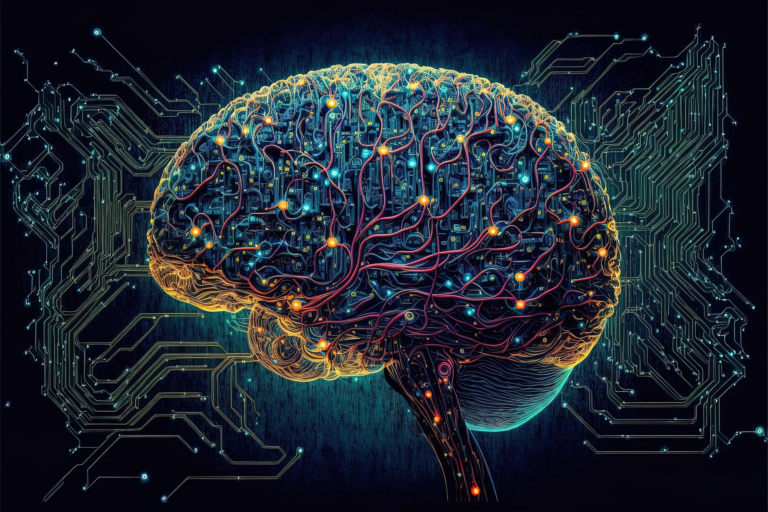
Jehovah created us with an amazing brain. The brain is composed of specialized nerve cells called neurons, which are responsible for transmitting information. Each neuron has, on average, thousands of synaptic connections to other neurons, creating a vast network of communication pathways. The 86 billion neurons form 100 trillion connections to each other! The intricate network of neurons and synapses allows the brain to perform a wide range of functions, including perception, memory, learning, and thought.
The brain never turns off, working all day and night to filter, sort, and interpret a constant flow of information. So, no wonder the brain gives some information full attention and processes some in the background.
Every person has automatic thoughts in response to the constant flow of stimuli into the brain. Often they occur quickly and outside of our consciousness, yet they can have a great influence on how we feel moment to moment. Conversely, how we are feeling emotionally also can affect our automatic thoughts.
All people have negative thoughts at times. However, people who are depressed, anxious, or angry, for example, have more negative thoughts more often than people who are generally happy.
Do angry people have more negative experiences during the day than happy people? Maybe, maybe not. However, depressed, anxious or angry people are more likely to interpret neutral situations and stimuli as negative.
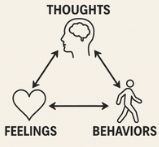
Consider this scenario with the CBT triangle in mind: An angry person is walking to her office and someone walks past without greeting her. Her automatic thought or interpretation may be that the person is inconsiderate, which may offend her and give rise to anger. Her anger may then influence her behavior. She may make an angry face, say something unkind, or even approach the person aggressively. As before, we can contrast this with a happy person. A happy person may interpret this as an oversight because the person is in a rush, which would make him feel compassion and forgiveness, in reaction to which he would likely want to act kindly and helpfully.
Who does Jehovah want us to be?
Summary: Automatic negative thoughts are common to daily experience. However, we can mitigate their impact by recognizing them, then challenging them to find the truth.
Exercises:
- Begin keeping track of your Automatic Negative Thoughts (ANTs) daily. Write them down for a week and see which you use the most.
- There are hundreds of scriptures that we can meditate on when thinking about who Jehovah wants us to be.
Consider these key words and find your favorite sciptures about who YOU want to be for Jehovah:
- holy
- love/loving
- righteous(ness)
- zeal(ous)
- thankful
- content
- giving/generous